
plant-speak II
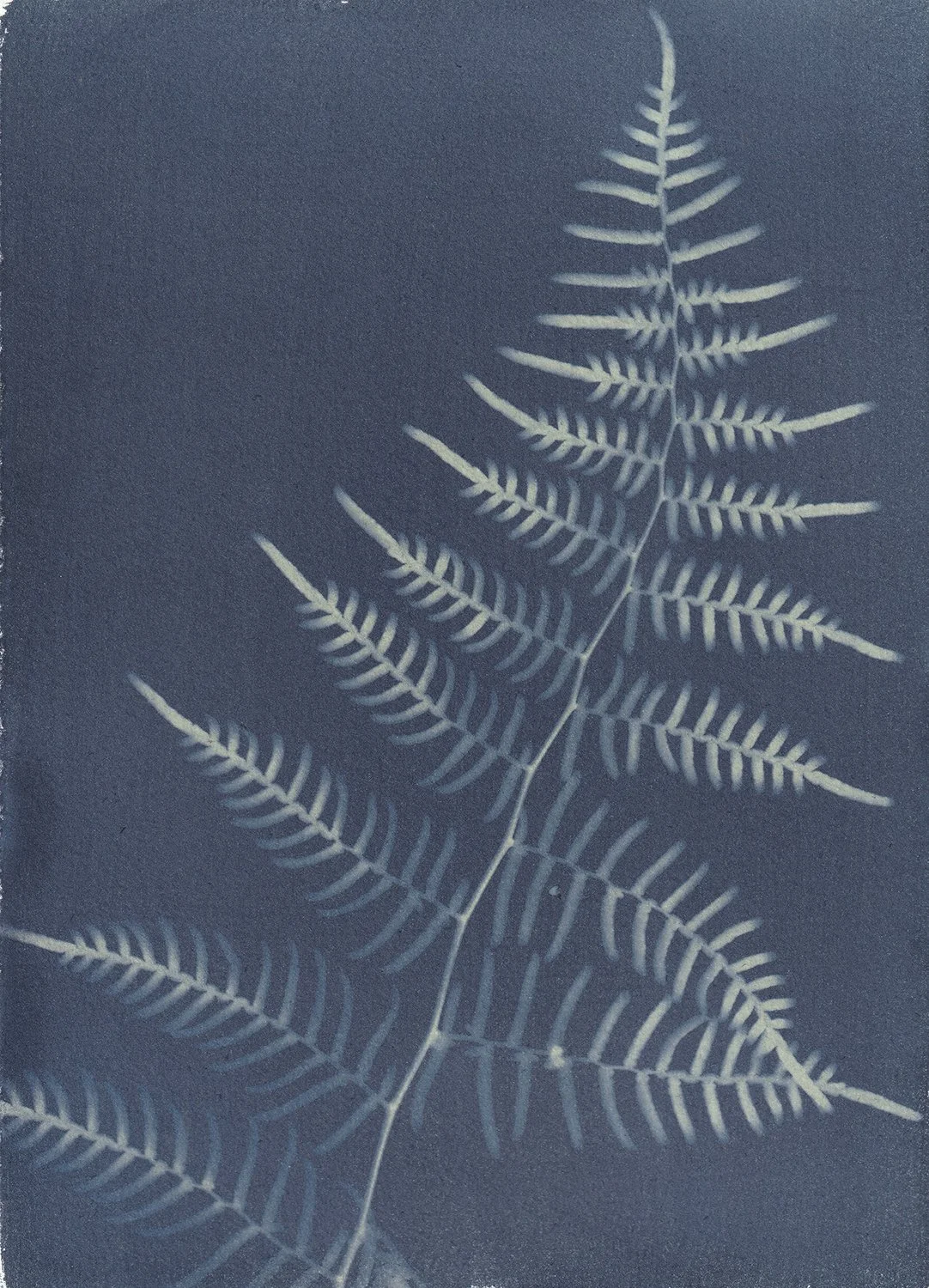
Bracken, dynamic exposure, from the coastal track at Goat Island
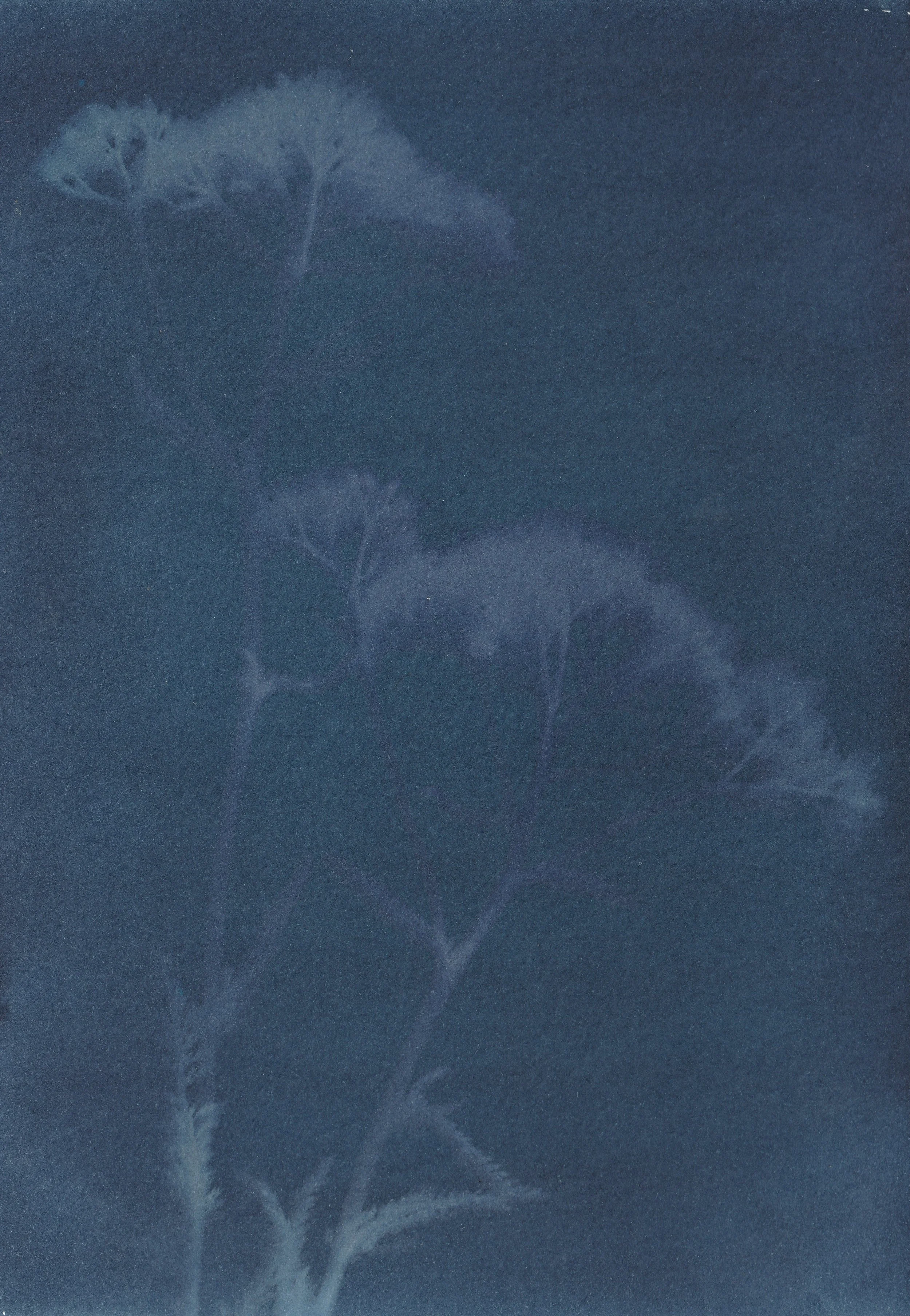
Yarrow, dynamic exposure from the beach below the farm house
Plant-speak II
Walking the coastal track that winds around the coast, I feel kindred with the flax and thin windblown trees clinging to the cliff face. Crowding one another and in competition for scarce resources, but very much there and alive. I’m also here before the sweep of open ocean, my roots embedded as deeply into the cliff face as I can make them, holding on for dear life. To be wind-blown is the price you pay for a view like this. Moving north from one island to another, I’ve traded cold wind for a warmer one. Salt and wind and ferocity. After dozens of walks and a dozen good storms, I see that it isn’t the tall, straight, heavy trees that outlast the cyclones and the slips, but the close to the ground and crowded trees, the spindly, bendy, wonky ones.
I plan to make cyanotypes at the farm and these can speak to the US work in the same way as the North Island work. But how will the South Island work speak to the North Island work?
The South Island plants and I have history. They’re older, more laid-down in me. I know more of the names. They’re oddly protective of me, boasting about our connection. But when I try to make dynamic cyanotypes at the beach below the farmhouse they don’t work. The yarrow and ice plant darken too fast like they don’t want to be made. The bull kelp calls, twisting and twirling in the rush of water. It makes sense to wash them —there’s far too much light at Christmas out here on the beach. It’s far too exposed to make dynamic cyanotypes. The pages of my workbook aren’t enough to preserve them.
The plants here are trying not to be drawn in — they’re above the fray and besides, I live here with them. They don’t need to compete for my affection or attention. (This might be the kind of thing that happens in the mind of children who spend too much time alone, children raised without god/s).
The plants are willing to donate pieces of themselves to the cause, to go down in the record, like a family album or a book of souvenirs. They make up the anatomy of how landscape has formed in me and how I have formed in the landscape. Planting trees and growing vegetables and walking in the wind, pacing coastlines like a caged animal, trying to make a living or a meal from the ground underfoot. I get so tired. That’s not for you, the plants say, let others work the land. They want me to tell of imprints and tracings and tangles and maps and that nice bit about the lower, weirder plants surviving cyclones. They want to be made into poetry.