Intertidal Body / Miscarriage Work

My writing and art practice endeavours to situate my personal experience within the wider ecological field, making a record of change in the body and in the ecological framework the body lives within.
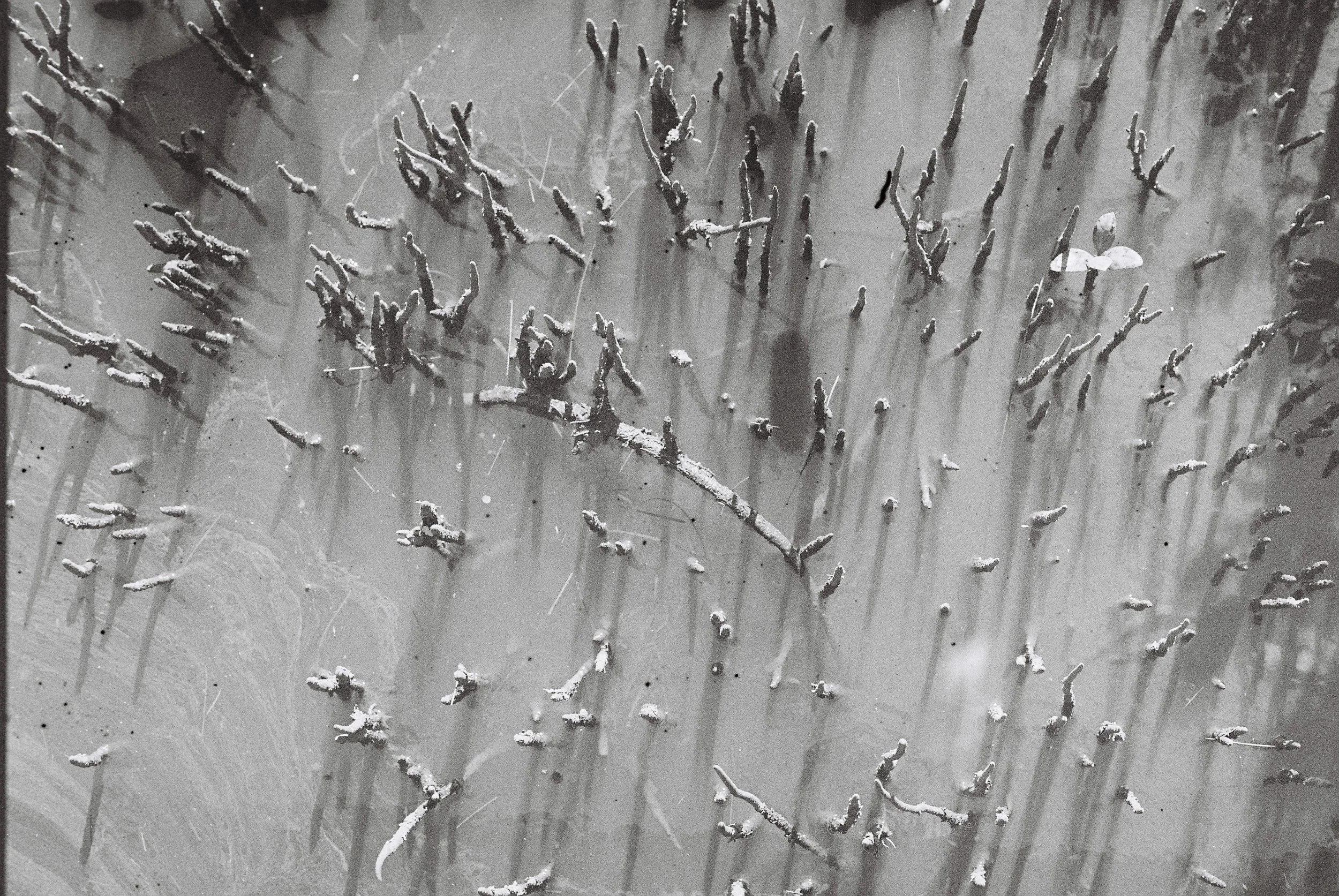
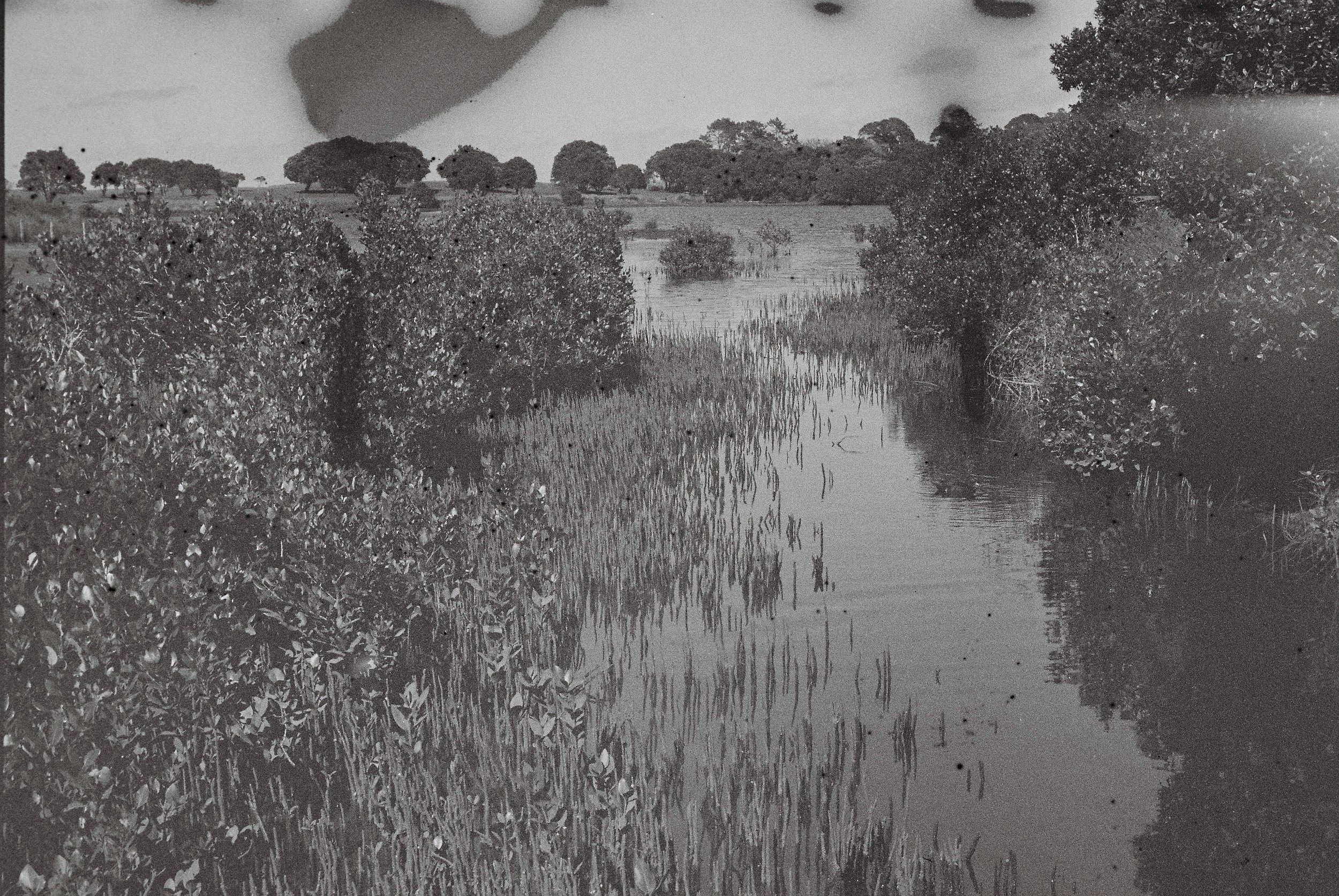
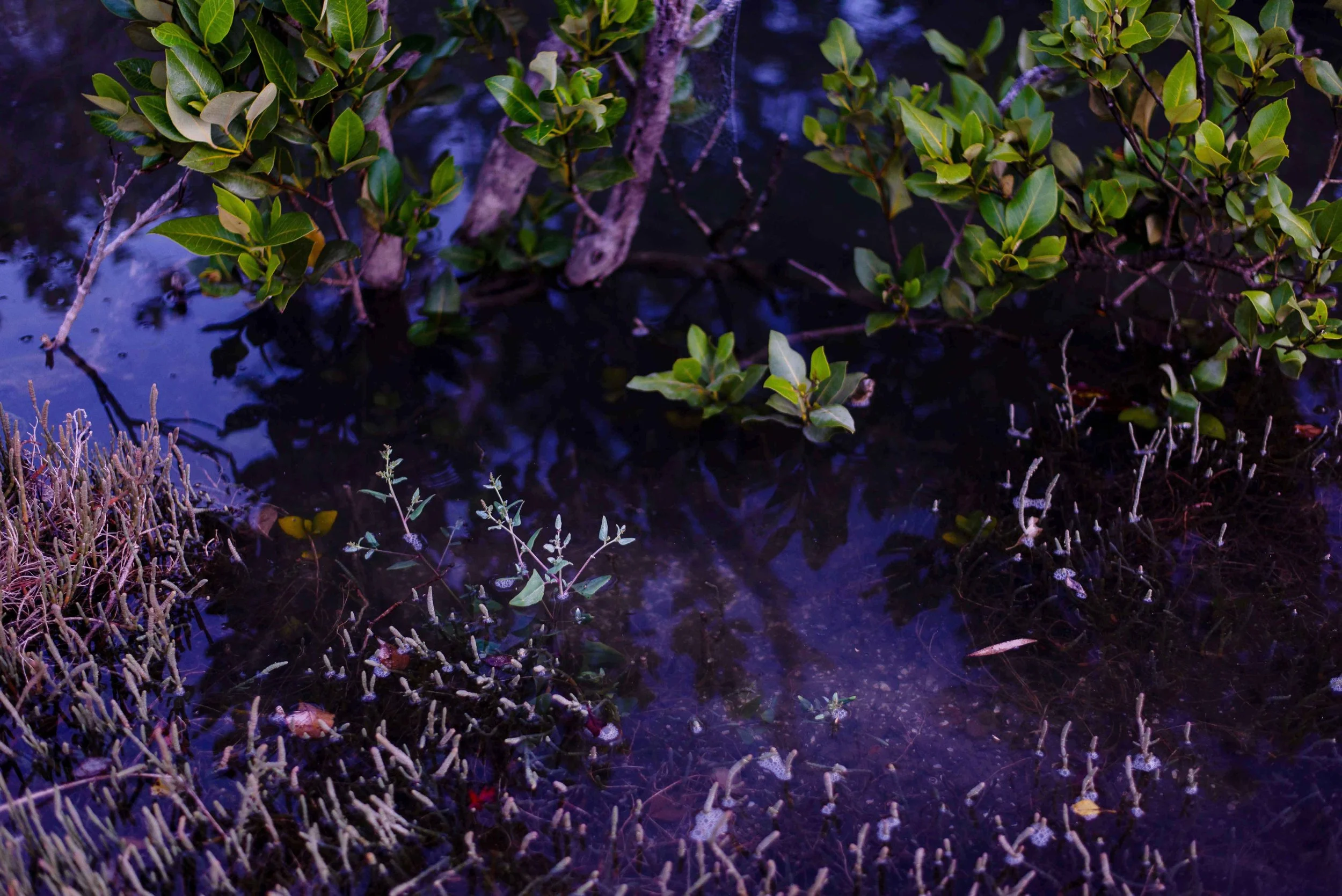
These photographs were taken when my partner and I went floundering a month after my second miscarriage. The pain of the second miscarriage made me animal. It was brutal but enriching and I was still reeling from the impact of it. Walking like a stilted bird through the shallows, water up to my shins, I felt animal, but not from pain. I stood in the water like a tall bird, peering in.
The ebb and flow of the mangroves soothed the hormones still ebbing from my body and the loss of the small failed body. I captured the magenta-hued world as night fell and I too felt magenta-hued, warmed by my very aliveness.
This work is an effort to capture the intricacies and intersections of miscarriage, subsistence living, and the coastal front lines of our changing ecosystems.
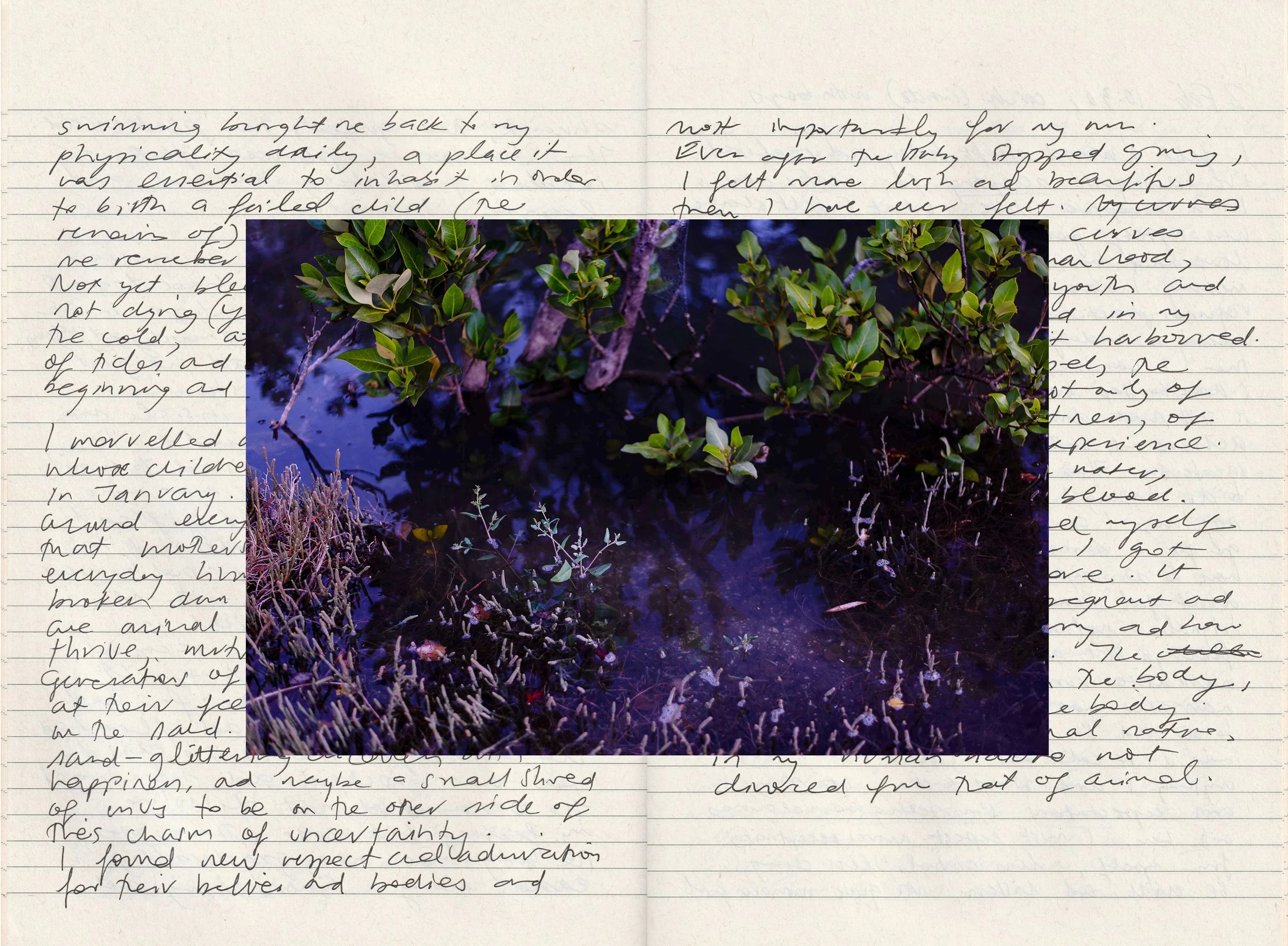
Excerpt from handwritten draft:
‘After the second scan, I recognised the hollow in my middle had turned to dead weight. The embryo in the second scan was smudged and grey, dissolved. The dead weight frightened me at first. To have a dead thing inside me felt dangerous. How would it come out? I was advised to wait.
My body started to feel more mine again, the life-force I’d gifted to the child slowly returned to me. I snorkelled and buoyed the dead weight along with me. The ocean was crucial in the formation of the second miscarriage’s narrative. It held me as I held the failed child. It rocked and floated and submerged me as the child too was rocked and submerged. The ocean did not dissolve my fears but eased them, as the baby too was gradually eased along.
Snorkelling and swimming brought me back to my physicality daily, a place it was essential to inhabit in order to birth a failed child (the remains of). The ocean helped me remember that I was animal: not yet bleeding, or, when bleeding, not dying (yet), sensitive to the cold, at the mercy of water, of tides and currents and epochs beginning and ending.
I marvelled at the mothers whose children swarmed the beach in January. How do we walk around every day just thinking that mothers are normal regular everyday humans? They have been broken down and remade, they are animal and yet they persist, thrive, nurture, grow the next generation of us. I wanted to bow at their feet, prostrate myself on the sand. I watched their sand-glittering children with happiness and maybe a small shred of envy to be on the other side of this chasm of uncertainty.
I found new respect and admiration for their bellies and bodies and most importantly for my own. Even after the baby stopped growing, I felt more lush and beautiful than I have ever felt. The prominence of my curves evidence of my womanhood, my humanhood, my youth and freshness. I delighted in my body despite what it harboured.
My body was it, the vessel, the sacred container, not only of new life but of witness, of ideas and art, of experience. It was how I felt the water, the sun and sand, the blood. It was how I defended myself from the sharks, how I got myself back into shore. It was how I became pregnant and how I would miscarry and how I waited in between. The world is run through the body, is first known by the body. I delighted in my animal nature, in my human nature, not divorced from that of animal.’
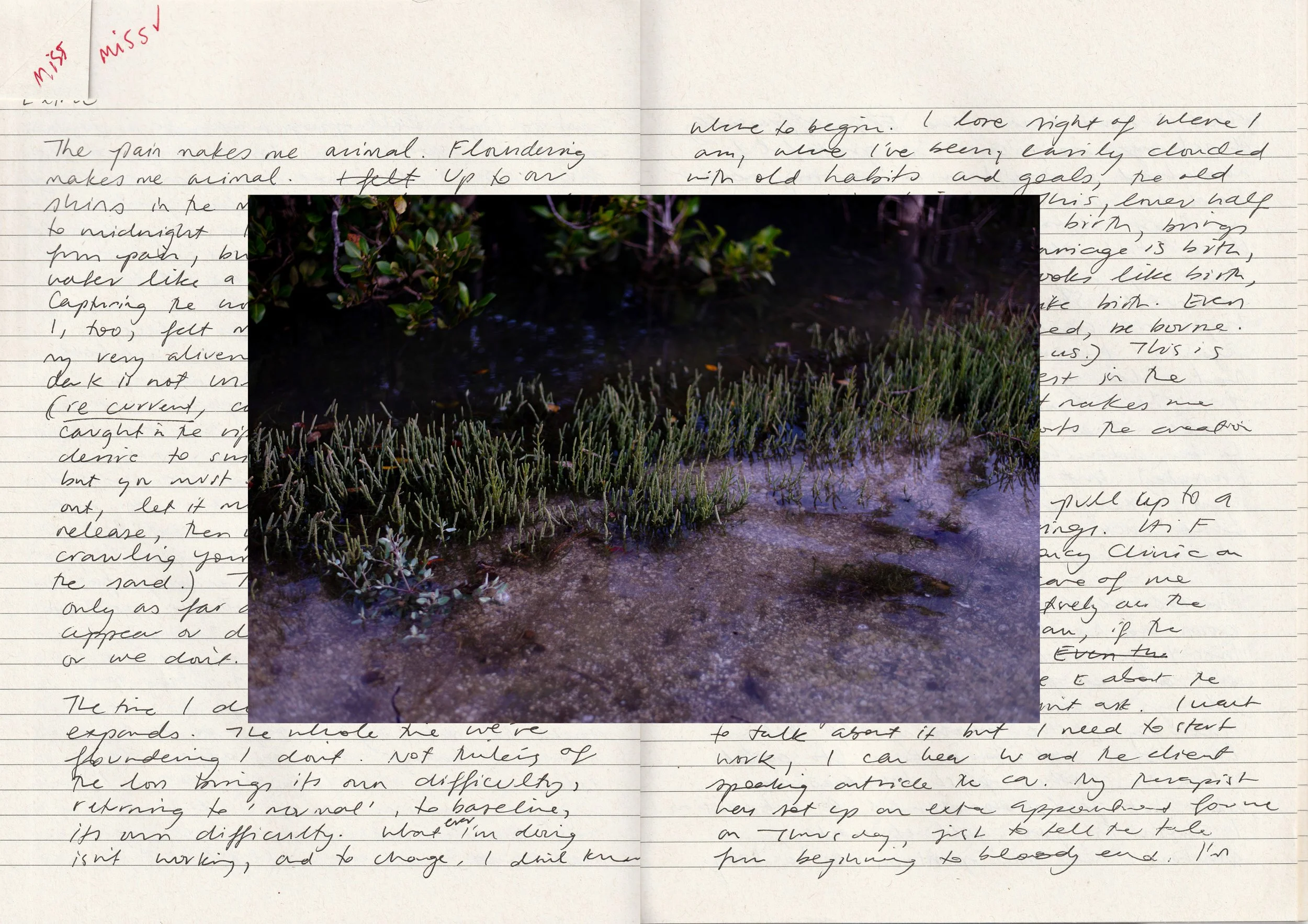
‘The pain makes me animal. Floundering makes me animal. Up to our shins in the mangroves from sunset to midnight I felt animal and not from pain, but because I stood in the water like a giant bird, peering in. Capturing the world as the light fades, I, too, felt magenta-hued, warmed by my very aliveness. Floundering in the dark is not unlike recurrent loss. The light illuminates only as far as it reaches. Flounder appear or don’t, we catch them or we don’t.
The time I don’t think of the loss expands. The whole time we’re floundering I don’t. Not thinking of the loss brings its own difficulty, returning to ‘normal’, to baseline, its own difficulty. Whatever I’m doing isn’t working, and to change, I don’t know where to begin. I lose sight of where I am, where I’ve been, easily clouded with old habits and goals, the old ways of doing things. This, (my) lower half submerged in water, in birth, brings me more alive. (Miscarriage is birth, it smells like birth, looks like birth, feels like birth, hurts like birth. Even the dead must be birthed, be borne. We can’t keep them inside us.)’
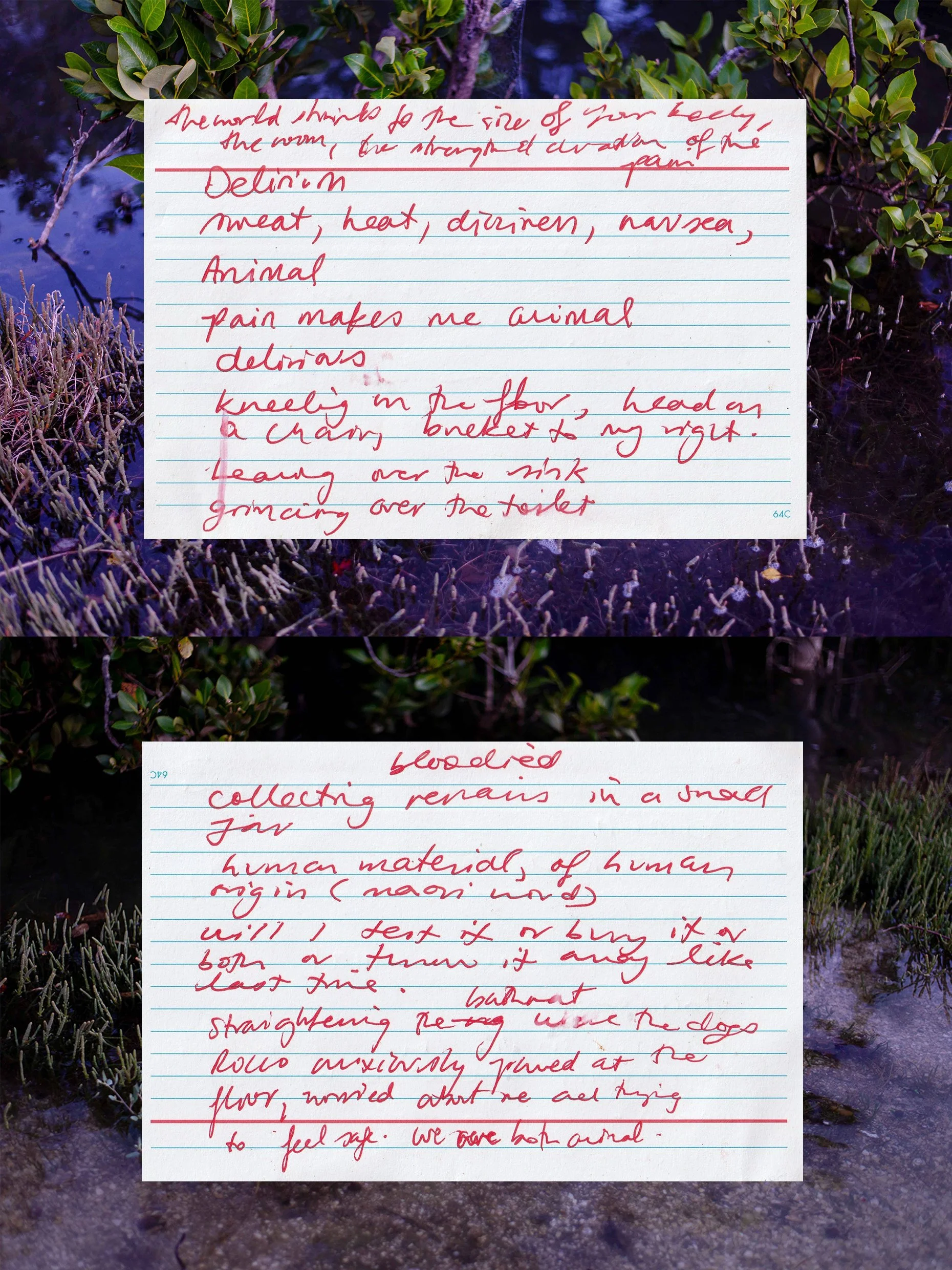
Notes Taken During a Miscarriage.
Index Card Front
‘the world shrinks to the size of your body, the room, the strength and duration of the pain
delirious
sweat, heat, dizziness, nausea
Animal
pain makes me animal
delirious
kneeling on the floor, head on a chair, bucket to my right.
Leaning over the sink
grimacing over the toilet’
Index Card Back (I think I added these notes afterwards)
‘collecting bloodied remains in a small jar
human material, of human origin (maori word)
will I test it or bury it or both or throw it away like last time.
straightening the bath mat where the dogs
Rocco anxiously pawed at the floor, worried about me and trying to feel safe. We are both animal.’
This work was made with the support of Art Photo School and Online Art Education. It is a work in progress.