
Walking the Ridge Road
Field Notes from Tessellations
I walk north a short way up the road from where I live towards the turn off to Goat Island. I hug the bank with every passing car, and step carefully so as not to accidentally stumble into oncoming traffic. It takes me a dozen walks to note the moth plant making its way up a clump of punga trees and the banana passionfruit vine, which, unlike the moth plant, I’m fond of, growing up through the cape wattle, its sprouting pink flowers giving it away. When I start walking this route regularly and paying closer attention, it is the beginning of October — spring is burgeoning into summer. I don’t know if my lack of siting certain plants right away is the result of myopia or simply due to each vine’s quick-growing sudden appearance in the trees as the season changes over.
I turn right onto Cape Rodney Road and walk along the high ridge. I feel a sense of spaciousness on the ridge road that is comparable with being underwater or on a boat or in the South Island where I’ve spent much of my life. I live in a valley in Leigh and though we are close to the sea, we can’t see or hear it. When I return to the coastal farm I grew up on south of Dunedin, I realise how much I miss the booming sound of the waves pounding the shore. Up on the ridge my heart lifts and lightens. The sky feels bigger and the land to the northeast tumbles down from the ridge to the valley below. A kingfisher perched on the power line sends its call over the valley. From here I can look down over Goat Island Campground, where I lived for nine months, and which exists now as a decommissioned version of itself. Each of the camp’s habitable buildings have been removed or torn down, and its septic, power and water systems disassembled. The towering pines that lined the camp’s long driveway sit now in messy broken piles beside the rutted up road. If I follow the spill of the valley I see the marine reserve glittering at its end.
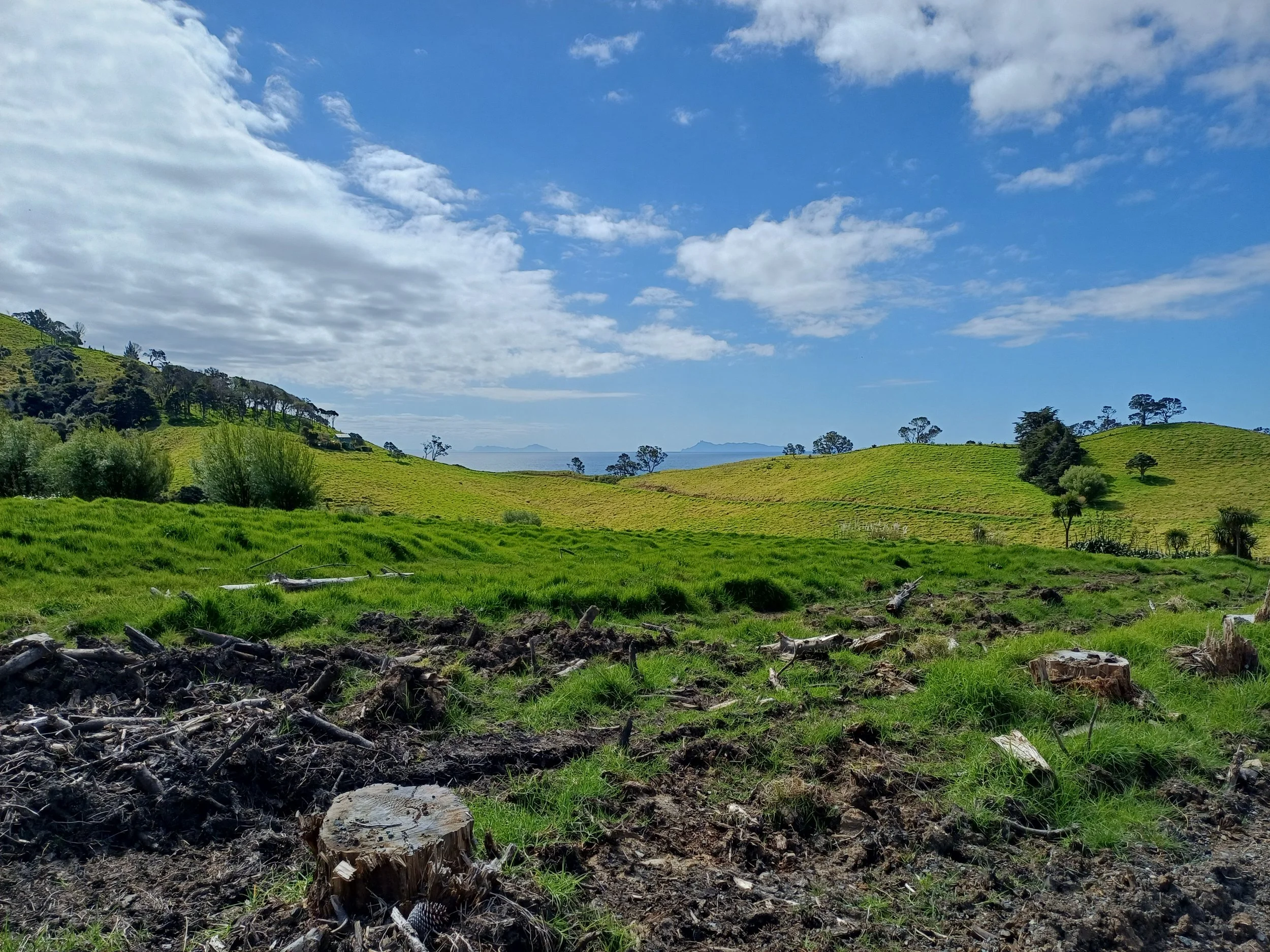
Goat Island Campground, disassembled.
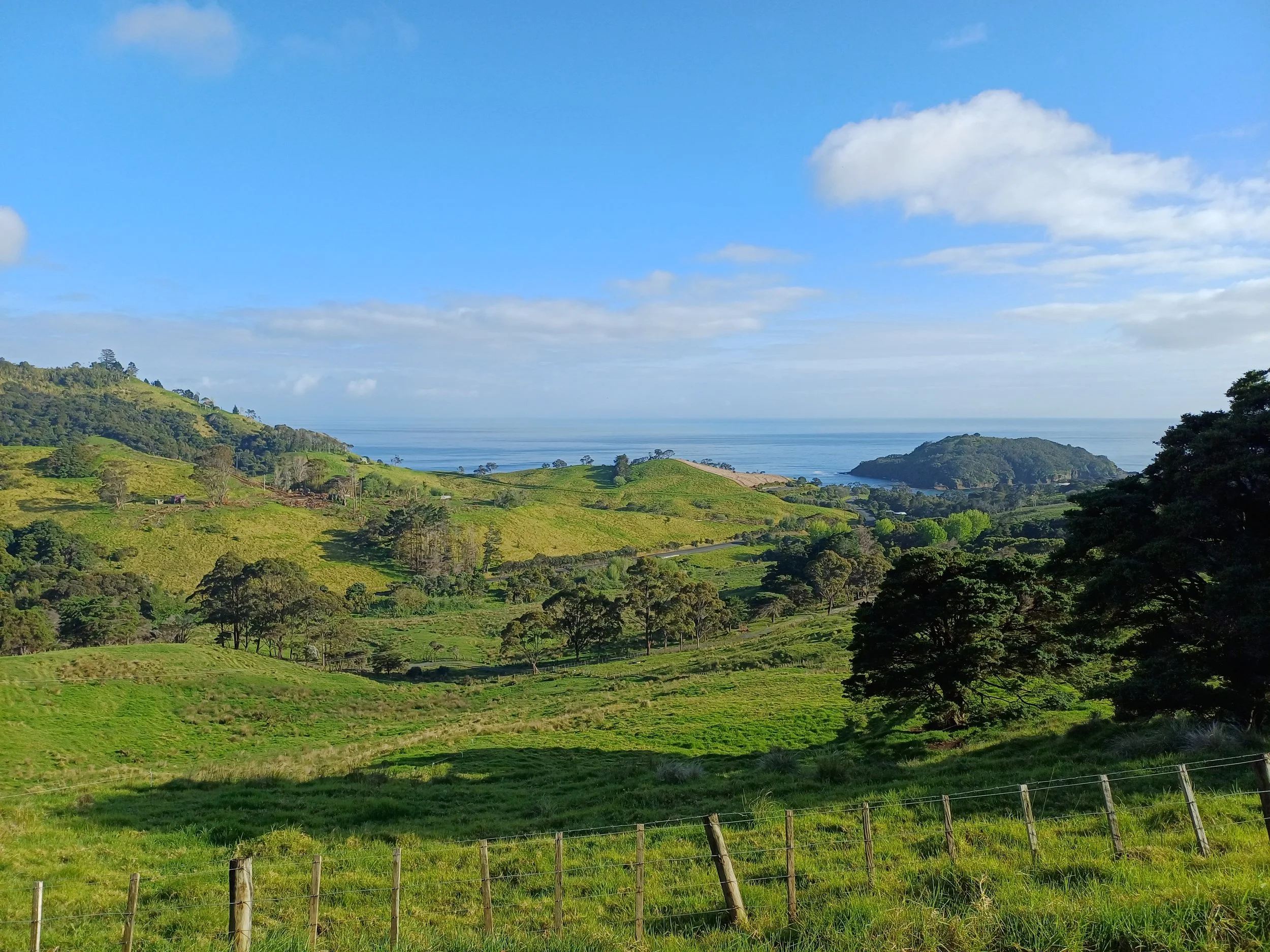
Looking from the ridge road over the valley to Goat Island and the marine reserve.
The ridge road now is lined with dozens of Daucus carota known commonly as Queen Anne’s lace or wild carrot but the very first specimen I saw was down below in the valley in the second half of October. At first I looked for it and did not find it, but by mid to late November, its blooms dot every field and roadside. I blamed my myopia at first but my partner kindly pointed out that it had probably only just come into flower.
The ridge road is where I first noticed the sedge grass that mirrors the sedge grass in the field adjacent to my sister and her now-husband’s lawn in Indiana where they were recently married. I made cyanotypes on her back porch from specimens I collected in their fields and along the driveway, of Queen Anne’s lace and goldenrod, the sedge grass and a few others. The prints came out crisp and finely detailed and I gave her four in an envelope as a wedding gift.
The difference up here on the ridge road, many thousands of miles and an ocean away, is that the specimens here aren’t native. If you’re listening to the audio recording of this, you’ll probably have deduced by now that neither am I. Certain American sounds remain in my speech, blended with the softer, blurred — almost apologetic — patterns of kiwi speech. My parents moved here with my sister and I when I was eleven and she was five. The kiwi kids at my first school fixated on my speech. I chameleon-ed my long vowels as quickly as I could but in certain words today, thirty years later, they persist.
Lifestyle sections with patches of native plantings and bare land line either side of the gravel road. There’s something about the grey-green clump of low native scrub off to the southwest that sets up a kind of dull ache in me. Sharp stout thickets, damp and low to the ground, dense and dark — guarded, impenetrable, unwelcoming. What I’m seeing at forty is an echo — I don’t see the landscape as it is now but as it seemed to me at eleven when I first arrived on the farm, its acres sprawling towards what felt like the end of the earth. Deep ravines tracked between every field from the road to the coast, tangled and bristling with dark foliage. The coastal scrub was mostly dense, low-to-the-ground thickets only a few inches tall, windswept gorse, broom and cabbage trees. The land was rough and remote. It felt wild but it wasn’t, not really — it had been stolen once, then felled, cleared, fenced, titled and sold, again and again and again.
The empty fields, exposed to the wind. The slightly frightening livestock. The electric fences. The torn down, collapsed fences, the tangled tumbles of wire, the barbed wire and its threat of violence. The township’s dump that sat side by side with the farm, the trash that used to blow around everywhere. The slow cleanup of the landscape. My dad bought the dump from the township for a few thousand dollars and closed it, filled it in and built a cattle-yard over the top.
I did not feel the warmth from the farm’s landscape that I craved as a young girl, that I knew from the small farm we had on the island in Lake Michigan. I remembered our home as soft and warm and tasselled — how quickly I forgot the darkness, the drifts of snow and ice.
I keep mentally straying from the trail, from the ridge, my emotions slipping south like earth. These walks are good for excavation, to shake all that earth loose in me, and free me up for where I am now. A salve for dislocation and its impacts on the body.
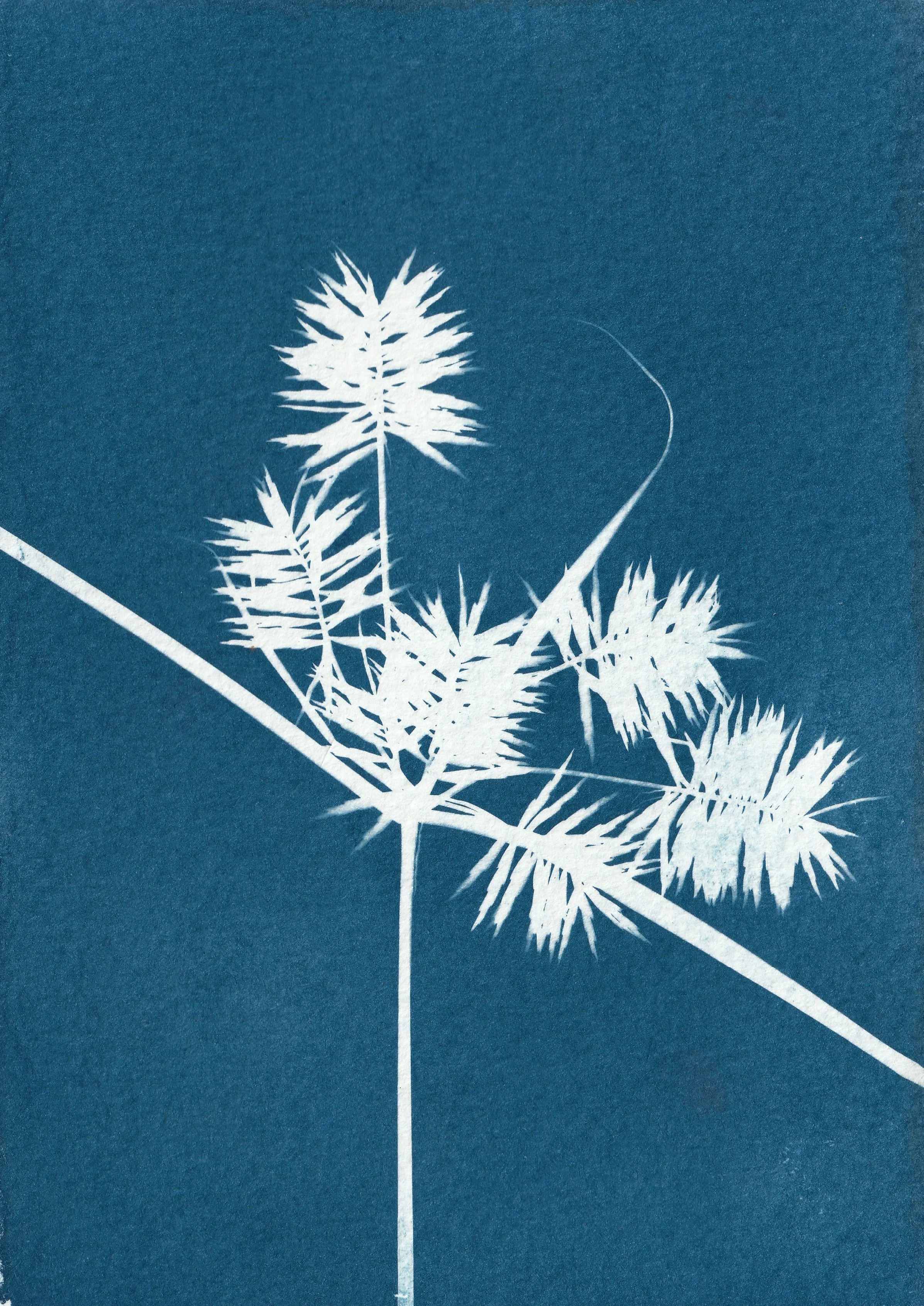
New Palestine, Indiana
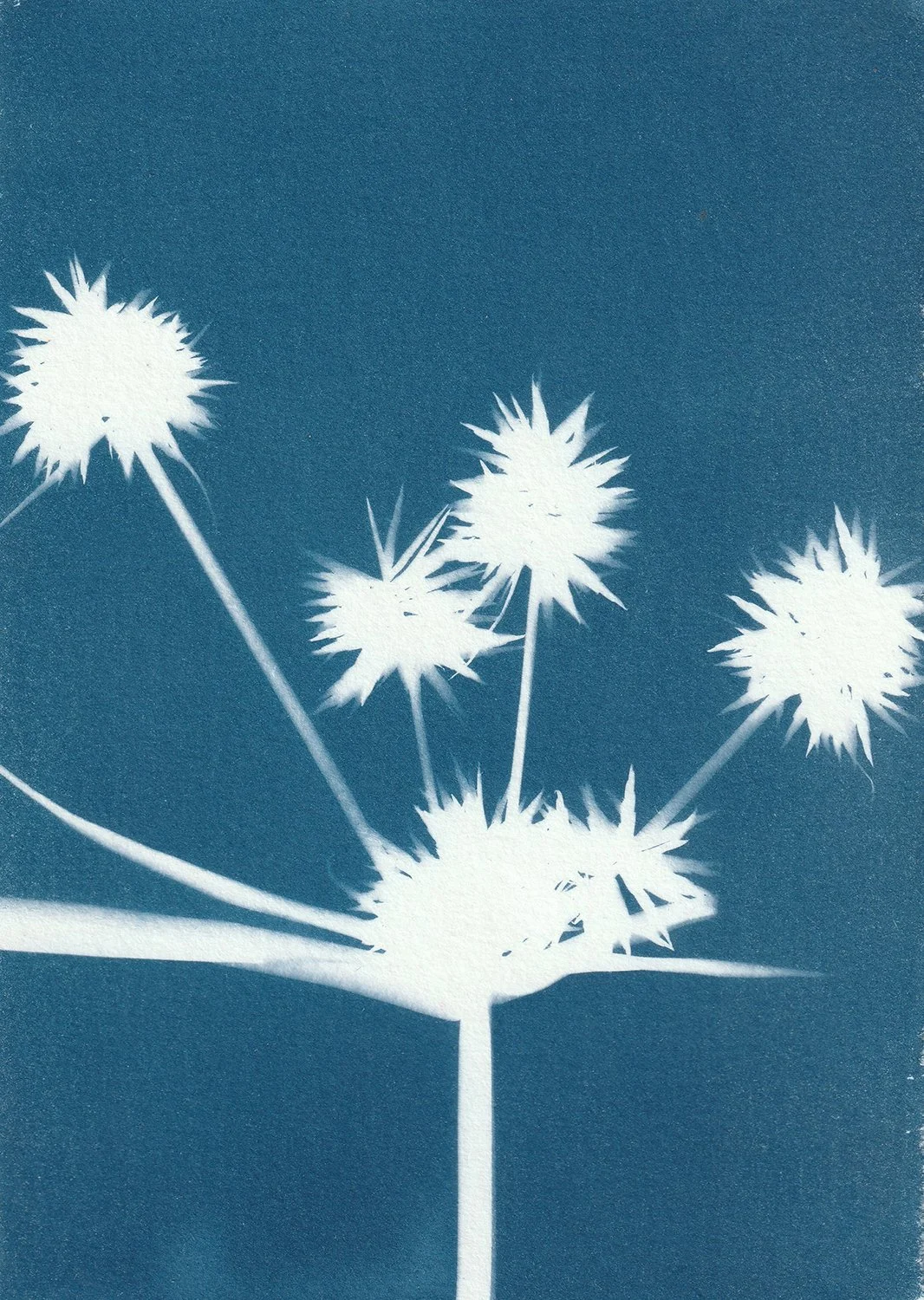
Cape Rodney, Leigh